Updated: 16th December 2025
As the seasons shift, the colder weather can present some incredible opportunities for drone operators, but it also presents some challenging conditions that can cause issues for seasoned and novice drone flyers alike. In this article, we will provide some practical tips to help you fly safely and without incident over the coming winter months. But before we do, we wanted to answer an important question:
Can you Fly a Drone in the Snow?
Whether you should fly your drone when it’s snowing depends on a few criteria, including your drone equipment, whether you need to maintain line of sight of your drone and the actual weather conditions you’re considering flying in (there’s a big difference between one or two flakes falling and a full blizzard with high winds).
The first thing to consider is whether your drone is designed to operate in low temperatures. For example, the CAA advises that “Some types of battery do not hold their charge as long in cold weather, and this may reduce the amount of time you can fly” and “cold or wet weather could affect your ability to control your drone or model aircraft safely”. To give you an idea of the recommended minimum operating temperatures, we’ve listed some of the ones provided by manufacturers for a selection of drones below; however, you must check the operating ranges and temperatures of your drone before operating it in adverse conditions:
- DJI Agras T50: -20°C
- DJI Mini 3: -10°C
- DJI Flip: -10°C
- HoverAir X1: 0°C
- Ruko U11MINI: 10°C
Moisture in the air at low temperatures can also cause problems such as propeller icing (read more below), and, beyond that, falling snow creates a line-of-sight issue, which, for most drone users, is essential to ensure safe drone operation and keep their insurance policy valid.
So, to answer the question, can you fly a drone in snow? Given the proper precautions, which include ensuring that your drone is capable of safely completing a flight in the conditions you want to operate it in and that you can fly it safely in those weather conditions, you may be able to fly in the snow. However, if the temperature is too low for your drone equipment or you won’t be able to fly it safely, for example, if the snow is creating very low visibility and you can’t maintain a line of sight which you require to operate your drone and stay insured, then you shouldn’t operate your drone in the snow.
As always, it’s essential as a drone operator to make an informed decision before flying your drone as to whether it’s safe to do so. Flying in adverse weather conditions, like the snow, is the same.
Prepare and Plan for Your Winter Drone Flight
Ensuring you take the time to prepare for your flight is vital, wherever or whenever you fly your drone. So, make sure you get ahead of the game by planning your flight in advance of taking off. The following checklist is a good place to start:
Winter Drone Flight Checklist
- Check the weather forecast.
- Plan what equipment you need.
- Make sure all your equipment is fully charged.
- Pack your drone equipment safely and securely, using lots of insulation.
- Plan your route, avoiding flying over difficult locations such as forests and open water.
- Plan for reduced daylight hours.
- Make a list of the images/footage you want to capture to make the most of your time in the air.
- Make sure you have a strong GPS signal before take-off.
- Keep your aircraft weight to a minimum to improve battery life.
- Take note of the wind during take-off, landing and while flying.
Winter Drone Battery Care and Maintenance
You might just think that the cold weather means you need to wrap up warm when flying your drone, but it can put your drone at risk of falling out of the sky without warning. Colder temperatures can greatly reduce the chemical activity in lithium batteries, reducing flight times and causing your batteries to become unstable.
Subsequently, it’s important to make sure all batteries are fully charged before you set off, and you regularly check them throughout your flight, keeping an eye out for any unusual drone battery status activity.
It’s also advisable to hover your drone at a low altitude for a few minutes at the start of your flight to enable your battery to sufficiently warm up. In addition to our Winter Drone Flight Checklist above, we’ve created a Winter Drone Battery Care and Maintenance Checklist below:
Winter Drone Battery Care and Maintenance Checklist
- Ensure you charge batteries to 100% before take-off.
- Never charge a battery at or below 0°C.
- Ensure batteries reach room temperature (20°C) or more before use.
- Keep batteries well insulated to help retain the heat.
- Monitor the health of your batteries throughout your flight.
- Plan for shorter flights to avoid the risk of batteries dropping below safe operating temperatures.
Avoid Airborne Moisture
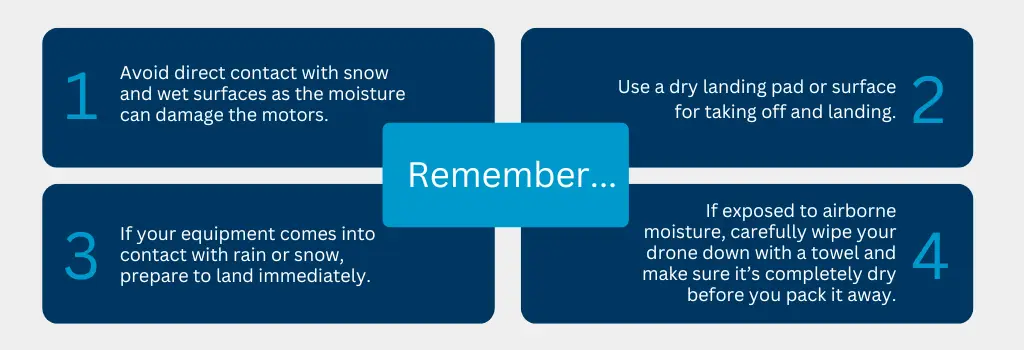
Drones have intricate motors and sensitive electronics that will receive natural exposure to airborne moisture due to rain, fog and snow, but these conditions can have a seriously detrimental effect on the operational capabilities of your drone, so it’s important to protect it from them where possible.
We know that your drone could have the potential to capture some stunning wintery scenes, but it really isn’t worth putting your equipment at risk if it hasn’t been built and designed to withstand flying in such extreme weather conditions.
It’s generally recommended that you:
Maintain Your Visual Line of Sight
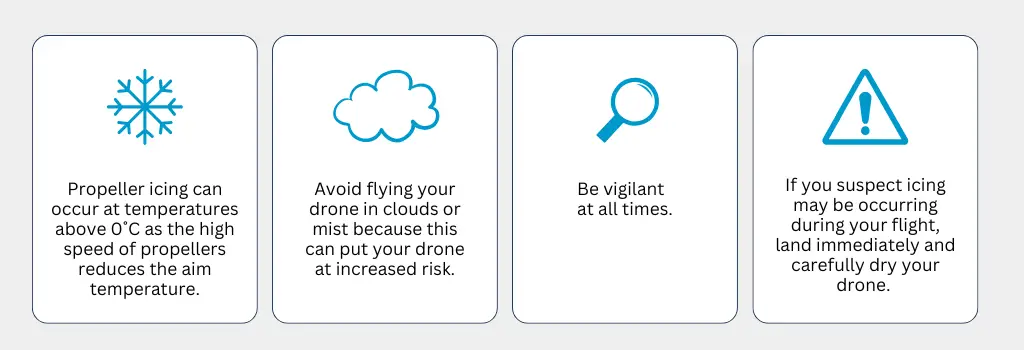
Whether you’re new to drone flight or a veteran, you should know that you need to always maintain line of sight with your drone, unless you are authorised and insured to operate a drone Beyond Visual Line of Sight (BVLOS). Unfortunately, it’s undeniable that flying through fog will impact your visual line of sight, as will rain or hail and potential glare caused by snow and low sun in the winter months. Subsequently, you should amend your flight distances in the winter so that you can always maintain an unbroken line of sight.
The Danger of Propeller Icing
Propeller icing occurs when ice particles build up on drone propellers during a flight due to a combination of low temperatures and the moisture in the air. It can cause serious damage to your equipment and, in worst-case scenarios, even cause your drone to crash.
You may think propeller icing can only occur in sub-zero temperatures, but this simply isn’t the case. This is why it’s so important to carefully monitor temperatures and plan for shorter, safer routes during the winter months.
Make Sure you Keep Warm
It may be obvious, but with the drop in temperatures, make sure you wear lots of layers, keep yourself well-fuelled, and make sure you wear outer layers that can cope with harsher conditions.
During flights, your hands will be exposed to the cold air. We recommend investing in a good pair of touchscreen gloves, which will keep your hands warm but won’t interfere with your ability to fly.
As we’ve covered above, the cold weather can have a detrimental effect on your drone batteries, but don’t forget about your mobile phone and other devices. It’s also important to keep any batteries and mobile devices warm.
Stay Protected this Winter and All Year Round
Keeping your drone safe isn’t just for winter; it’s for the rest of the year, too. Make sure you have the correct level of protection in place should something happen when flying your drone in the winter months and beyond. A reliable policy gives you peace of mind whether you’re flying in cold weather or bright summer days. Click Get a Quote to set up your cover.