Last updated: 28th October 2026
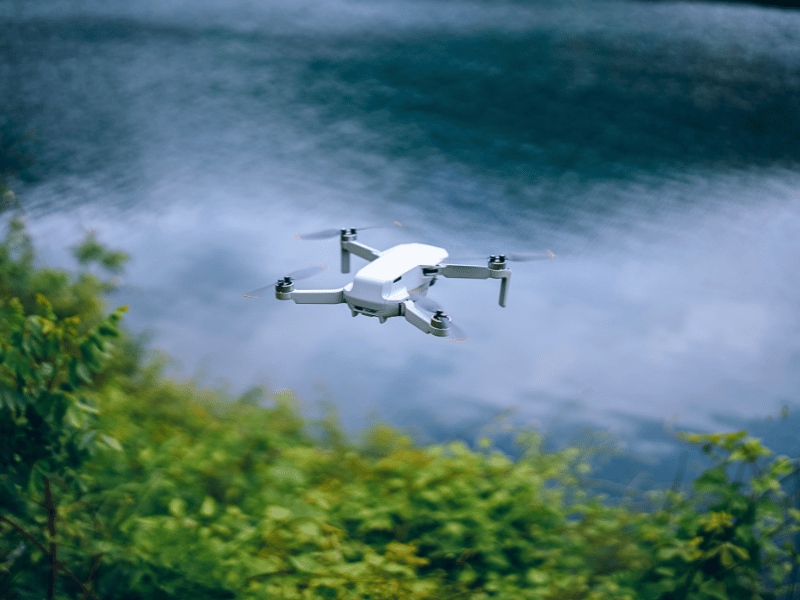
Drone environmental monitoring relies on drones fitted with cameras and sensors to observe and measure the natural world, and it has quickly become one of the most valuable tools in conservation and environmental work. From tracking wildlife to detecting pollution and mapping landscape changes over time, environmental monitoring drones now gather data that used to take far more time, money, and risk to collect.
In this guide, we explore how drones monitor the environment, whether they’re good for the environment, and what the work involves if you operate a drone for environmental monitoring for a living.
This guide provides general information only and doesn’t take into account your individual circumstances. It isn’t advice on selecting insurance products, and you should always check current regulations with the relevant aviation authority before you fly.
Key Takeaways
- Environmental monitoring drones can be used to monitor wildlife, air and water quality, pollution and land change, often faster and more safely than traditional methods.
- Sensor-equipped drones can detect methane and other gas leaks, supporting compliance with tightening emissions rules.
- Used responsibly, drones are a low-impact way to collect environmental data, with a smaller carbon footprint than crewed aircraft.
- Environmental monitoring is a growing commercial field for drone operators, with its own risk and insurance considerations.
Contents

How Do Drones Monitor the Environment?
At its simplest, environmental drones carry a camera or sensor and follow a planned route; they then turn the information they collect into usable data. Depending on the task, the drone’s payload can include a high-resolution or thermal camera, a multispectral or LiDAR sensor, a gas detector or anything else that aids drone-led environmental monitoring.
Because a drone covers ground quickly, reaches places that are difficult or dangerous to access, and can repeat the same flight time after time, it’s ideal for spotting change, whether that’s a shrinking habitat, a spreading pollutant or a leaking pipeline.
Drone environmental monitoring tasks can include the following:
Tracking Wildlife and Biodiversity
Conservation is one of the most established uses of environmental monitoring drones. They let researchers count animals, monitor herds and nesting sites, and survey habitats across terrain that would be slow, costly or dangerous to reach on foot.
A great example of wildlife tracking can be found in a recent case study by heliguy, in collaboration with DroneWild and BH Wildlife Consultancy, which highlights how drones and artificial intelligence are transforming wildlife monitoring and conservation. By combining thermal-imaging drones with AI-powered species recognition, these organisations can rapidly identify, count, and track animals across large, often challenging landscapes with minimal disturbance to wildlife.
Combining drones with AI can provide accurate, evidence-based data that supports conservation planning and population management, with successful projects ranging from surveying deer populations in the Broads National Park to uncovering larger-than-expected wallaby populations on the Isle of Man. By reducing manual analysis, improving accuracy, and enabling large-scale environmental surveys, drones are proving to be a powerful tool for modern wildlife management and ecological conservation.
Because a drone observes from above and at a distance, it can often gather data with less disturbance to wildlife than traditional ground-based surveys, when operated responsibly and at appropriate distances. Using a thermal camera, work can extend into night surveys and anti-poaching patrols. Repeat flights over the same area can also build an accurate picture of how populations and ecosystems change over time.
Monitoring Air Quality and Detecting Emissions
Fitted with gas and particulate sensors, emissions monitoring drones can sample air quality at heights and in places fixed ground stations can’t reach, from above industrial sites to across landfills.
One of the fastest-growing applications of environmental drones is methane and gas-leak detection, due to tightening regulations. The EU Methane Regulation has been in force since August 2024 and requires energy companies to find and repair leaks, exactly the kind of detect-and-locate task that drone-mounted sensors increasingly carry out.
Assessing Water Quality and Pollution
Over rivers, lakes, reservoirs, and coastlines, environmental monitoring drones can capture data that would otherwise require a boat or be unsafe to reach. They can spot pollution and algal blooms, map how contamination spreads, and monitor sensitive habitats such as wetlands and coral reefs. Multispectral sensors on environmental assessment drones can also reveal water-quality changes invisible to the naked eye.
Mapping Land and Environmental Change
Drone mapping and surveying can provide precise, up-to-date data. Using photogrammetry and LiDAR, operators build detailed terrain and vegetation models, track deforestation, coastal erosion, and flooding, and compare surveys over time to measure change. This is core work for environmental consultants and for anyone carrying out an environmental assessment.
Supporting ESG and Sustainability Goals
Beyond fieldwork, organisations increasingly use drone data to support ESG (environmental, social and governance) reporting and sustainability targets. Accurate, repeatable measurements of emissions, land use, and habitat can provide organisations with valuable data for environmental reporting and sustainability initiatives, and help direct restoration efforts.
Are Drones Good for the Environment?
The short answer is yes; they can be, though it depends on the context. A battery-powered drone produces no direct emissions in flight, and for many survey tasks it can now replace a helicopter or light aircraft.
Because they gather precise, high-resolution data from the air, drones can document species without a human observer on the ground, reducing the disturbance fieldwork can cause; drone surveys have also been shown to be more accurate than standard methods and lower in cost.
The precision of drones for environmental monitoring makes them an effective tool for directing conservation efforts. Like any electronic device, they carry a manufacturing and battery footprint, and responsible operators still need to minimise noise and disturbance to wildlife. Used well, drones can provide significant environmental monitoring benefits in many applications.
Environmental Monitoring and Drone Operators
Environmental monitoring is a growing commercial field, from wildlife surveys to regulated emissions work, and much of it is specialist. Operating a drone beyond visual line of sight (BVLOS), over sensitive sites or across industrial facilities often requires specific permissions (such as Operational Authorisation supported by a SORA assessment), and the sensor payloads involved can be valuable.
If you’re taking on environmental monitoring work, it’s important to be clear about the current rules, including EC 785/2004, and the national aviation authority where you intend to operate your drone, such as the Civil Aviation Authority. You should also ensure you have suitable Commercial Drone Insurance in place, as many clients require it and it may be necessary depending on the nature of the operation and applicable regulatory requirements.
At Coverdrone, we provide insurance for organisations with drone fleets, ensuring every safely and legally operated drone and operator has the necessary cover, whether those drones are used to monitor pollution levels, track wildlife, or support other sustainability projects.

Drone Environmental Monitoring FAQs
How do drones monitor the environment?
Environmental monitoring drones carry cameras and sensors that capture images and measurements from the air. That data can then be used to track and analyse wildlife, air and water quality, pollution, and ecosystem changes over time.
Are drones good for the environment?
Used responsibly, yes, they can be. Drones used for environmental monitoring can gather data with a smaller carbon footprint than crewed aircraft and with minimal disturbance, although, like any device, they still have a manufacturing footprint.
How do drones help wildlife conservation?
Drones let researchers survey animals and habitats quickly and from a distance, including at night with thermal cameras, with far less disturbance than ground teams.
Can drones detect gas leaks?
Yes. Fitted with gas sensors, drones can detect and help locate methane and other leaks, supporting emissions monitoring and faster repair.
Summary
From wildlife and water to emissions and ESG reporting, drones have become an essential tool for understanding and protecting the environment, and their uses keep growing. It’s a commercial opportunity for drone operators, provided they work safely and legally and have suitable cover in place.
Get Cover for Environmental Drone Work
At Coverdrone, we specialise in insurance for businesses and drone operators, including those carrying out environmental monitoring, survey and inspection work. Whether you’re a sole trader running conservation surveys or a business with a fleet, we can help you find cover built around how you operate.
You can get a quote for Commercial Drone Insurance online or speak to our in-house Support Team to talk through what you need.