Updated: 3rd June 2026
Approximately 71% of the Earth’s surface is covered by water. That’s a lot of rivers, lakes, waterfalls, oceans and various bodies of water to fly your drone over. Water can be stunning, but it’s also hazardous. That doesn’t necessarily mean you should miss out on opportunities to operate your drone over water, but you should take precautions to ensure safer operations.
In this guide, we’ve collated our 5 top tips for flying your drone over water environments. While we don’t encourage anyone to operate their drone over water, as doing so inherently poses a risk to your equipment, here are some steps you can take to reduce the risks.
Our Top 5 Tips for Flying a Drone Over Water
1. Get Organised
Regardless of whether you’re operating a drone over land or water, nothing is more important than planning and preparation. Before operating your drone, consider:
- Where you will operate your drone
- The route along which you will operate your drone
- The equipment you’ll need
- Whether you’ve met all regulatory requirements (including operational permissions, health and safety and any applicable insurance requirements)
It’s also important to prepare your equipment before your operation. Make sure that:
- Your batteries are fully charged
- There’s no damage to your equipment (for example, by checking your propellers)
- You test your equipment by flying at a low but safe altitude over land before flying over water
By compiling a robust pre-flight plan and checklist, ensuring your equipment is in good working order before an operation over water, you can gain peace of mind and reduce the risk of an incident.
2. Don’t Underestimate the Value of Training and Practice
If you’re new to operating drones or your company has new hires who haven’t logged much time operating drones, don’t underestimate the value of practice time over land and in safer, more predictable environments.
Setting aside time to master even the simplest of skills before beginning your drone operation over water can help improve take-off, flying and landing skills, boosting confidence and control.
3. Unless You Have BVLOS Approval, Never Fly Outside Your Visual Line of Sight
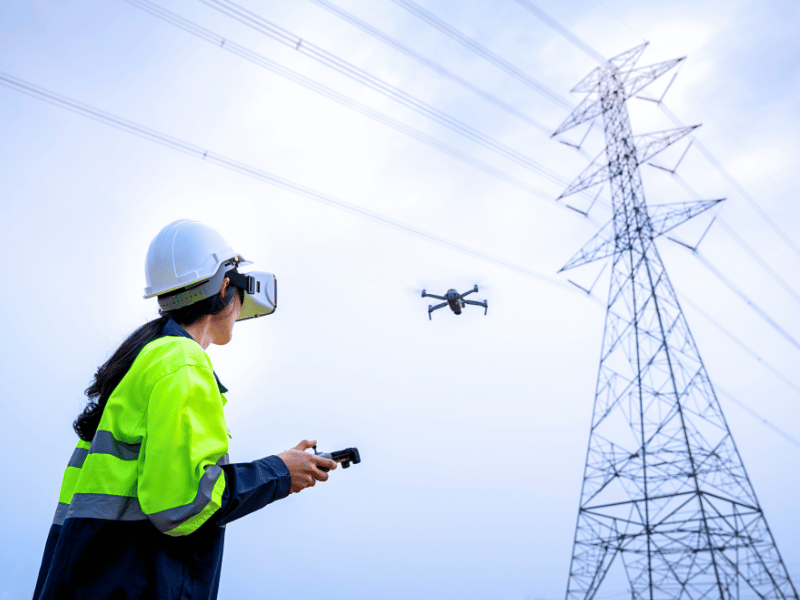
It’s important to avoid flying your drone beyond your visual line of sight, unless you have the required operational approval from the relevant aviation authority to conduct BVLOS (Beyond Visual Line of Sight) operations. If you don’t have BVLOS authorisation, for example, in the UK, you must:
- Maintain continuous, direct, unaided visual contact with your drone.
- You can use corrective lenses if required.
- You can’t solely use First Person View (FPV) screens or goggles, rely on aircraft lighting or assume the position or telemetry of your drone.
- Maintain control of your drone’s flight path.
- Monitor your drone’s position, orientation and movement
- Ensure you operate your drone at a safe distance from people, obstacles and other airspace users.
For more guidance on Visual Line of Sight, we recommend reading the CAA’s Drone Code, but ensure you check local laws and regulations before operating your drone.
4. Manually Update Your Home Point
Manually setting your home point (the point where your drone took off or where you want it to land) before each operation is a beneficial step (if your drone includes the ability to do so). Doing so prevents your drone from taking unexpected actions during an operation and lets you use your RTH (Return to Home) safety feature, which automatically returns your drone to its home point.
You may encounter a challenge if you launch your drone from a drifting boat and set that as your home point, because it won’t be stable. In this instance, if you want your home point to remain on your boat, you’ll need to update it to keep the GPS up to date manually. Alternatively, you may want to choose a stable point on land.
5. Pay Attention to Weather, Wind Speed and Your Surroundings
Higher wind speeds can affect your drone’s stability and drain your batteries faster. At the same time, you may be able to plan to avoid a particularly windy day, where possible.
Even on the day of your operation, you can gauge the wind’s strength before you launch your drone and decide whether to delay your flight. Keep in mind that the higher you fly in the air, the greater the force of the wind, so if conditions are windy close to the ground, they’ll likely be worse higher up. You’ll also find that wind speed can increase over open bodies of water.
When paying attention to your surroundings, be aware of any obstacles you may encounter during your flight. If you notice any potential hazards beforehand, stay safe and delay launching your drone. Some of the most common obstacles when flying over water environments include:
- Objects that interfere with the compass or GPS signal, including lighthouses or any device that uses antennas, magnets, or Wi-Fi.
- Natural objects, such as trees, rocks and birds.
- Waves (maintain your distance above the water to avoid colliding with any waves).
- Boats of all shapes and sizes.
Be a Safer Drone Operator to Reduce Your Risks
Wherever you operate your drone, reducing your risks reduces the chances of an incident. By taking practical steps, including those we have covered in this guide, and being cautious, you can operate your drone more safely over water.
Explore Drone Insurance Protection
While it’s still beneficial to prepare, you may want to consider a specialist Drone Insurance policy. Specialist Drone Insurance can help protect you against certain insured risks, subject to policy terms, conditions and exclusions. At Coverdrone, we offer Commercial and Recreational Drone Insurance policies that can be tailored to meet your needs, giving you additional peace of mind when flying over water.