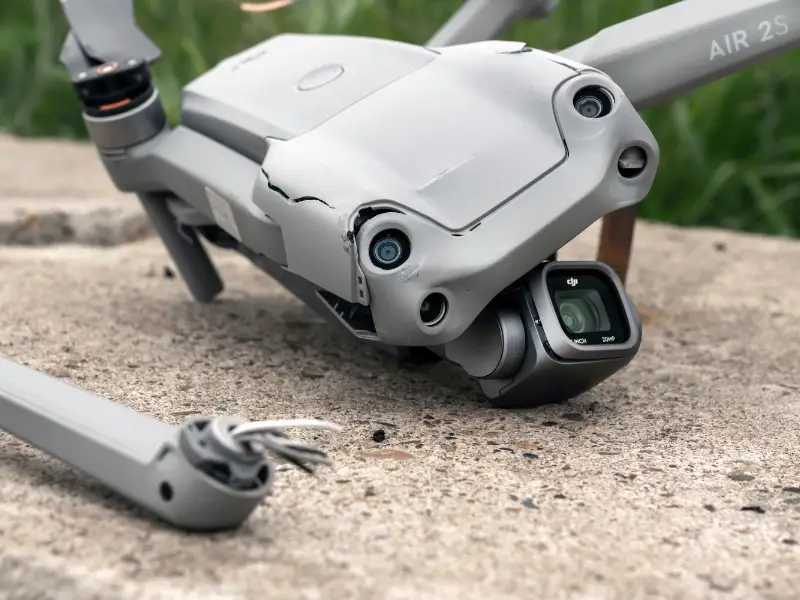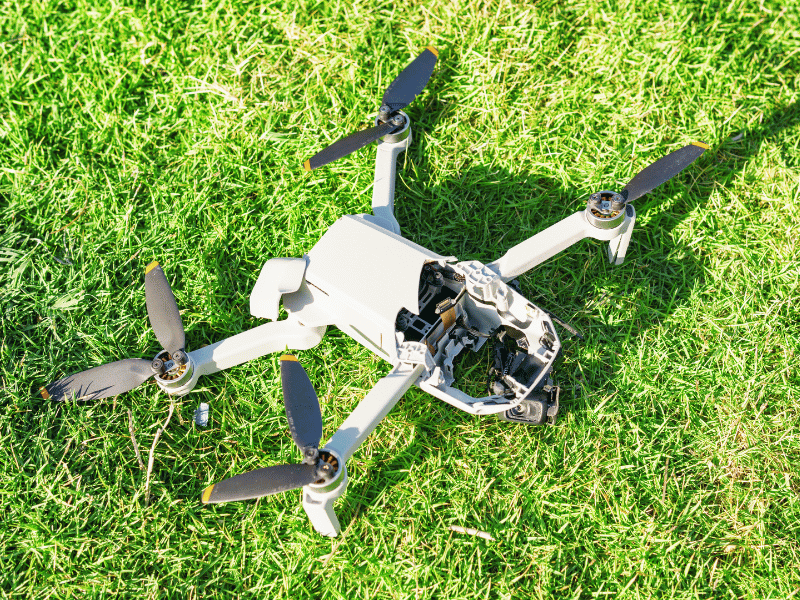
As drone operators, there are occasional challenges to overcome, whether you’re new to operating a drone or a veteran, you’re likely aware that there are steps you can take to reduce your risk of an incident, but a robust insurance policy with an adequate level of cover for your activities can provide that crucial peace of mind and protection should the worst happen.
So, what challenges are drone operators facing, and when challenging situations result in the need to make an insurance claim, what do they claim for? That’s what we’ll explore in this article. Read on to discover the top ten reasons for drone insurance claims in 2025.
Please note that this list includes only ten of the most common types of claims we received in 2025 and is not an exhaustive list of all claims for 2025.
10. Third Party Liability
Making its first appearance in the top 10 reasons for drone insurance claims this year, the third-party liability category includes third-party injury and property damage claims. These claims include incidents in which a drone causes injury to someone other than the operator or damage to someone else’s property. The inclusion of Third Party Liability on this list highlights that drone use is increasing. While information on the safe operation of drones is arguably more readily available than ever before, the risk of more incidents will increase as the number of drone operators grows.
Thankfully, there are steps you can take to reduce your risk of an incident occurring:
- Ensure you maintain your equipment, checking that it is in good working order as per the manufacturer’s specifications.
- Only operate your drone with a fully charged battery to avoid loss of power.
- Avoid operating your drone in unsafe weather conditions where you could lose control or sight of your drone (if line of sight is required).
- Remain vigilant when operating your drone, always paying attention to your drone and surroundings.
- Always fly safely, ensuring you follow the laws and regulations of the location you operate your drone in.
Even the most experienced drone operator can follow these steps and get caught out by something unexpected, which is why it’s also crucial to have a dedicated drone insurance policy that provides that extra peace of mind so you can focus on operating your drone.
9. Mechanical Failure
Mechanical failure has moved from its No. 7 position in our top 10 reasons for drone insurance claims list, after holding the position for two years straight in 2023 and 2024. So why was there a change in 2025? This is purely speculation, but it could be a combination of two things:
- Drones are getting better
You don’t need to be much of an expert to know that drones have come a long way in the past few years. As technology improves, we’ve seen new safety features introduced and that help reduce the risk of mechanical failures that could lead to a claim.
- Information about drones is out there
It’s also important to note that drone use is constantly evolving, and as it does, information about drones becomes more widely available. As information becomes easier to access and digest, people can better care for their equipment and spot issues that can lead to mechanical failure before they occur.
Regardless of why there were fewer mechanical failures than other claim types in 2025, remember that your drone manufacturer will have its own guidelines that you should adhere to so that you minimise the risk of mechanical failure during a flight. By following these guidelines and carefully performing your mechanical and safety checks before take-off, as well as regularly updating any software, you can lower the risk of mechanical failures.
8. Claims for Loss of Power
Having a drone lose power can be an operator’s worst nightmare. Many drones now come with features to avoid issues with drones causing an incident due to loss of power, including the following:
- Improved battery features that ensure your drone batteries are used more efficiently
- Voltage and current monitoring
- Better battery thermal regulation
- Battery cell balancing
- More efficient drone components that reduce battery usage
- Software features that alert drone operators to low batteries or land drones before they run out of power
Loss of power incidents can still occur, as evidenced by ‘loss of power’s position on our list, but there are steps you can take to prevent them from occurring.
To help avoid a power-loss incident with your drone, always ensure your batteries are fully charged before take-off, avoiding flying with low or partially charged batteries wherever possible. Even if you think you have enough power to complete a flight with a partially charged battery, keep in mind that doing so increases your risk of losing power mid-flight.
7. The Weather
While drones can be very resilient, they still have intricate motors and sensitive electronics that require protection. Airborne moisture from rain and fog can cause issues, especially when combined with colder temperatures, which can introduce snow, increase propeller-icing risk, and significantly reduce chemical activity in the lithium batteries that power the drone. Poor weather can also introduce visibility issues and problems with drone control owing to high winds, making it one of the biggest (and least predictable) challenges for drone operators in terms of flight planning.
One of the most valuable things you can do as a drone operator before flying, if you’re concerned about the weather, is to check the weather forecast. It might sound straightforward, but this easy-to-do step could save you from some difficult drone experiences. Some of the weather conditions to look out for that can make operating a drone challenging include:
- Wind speed:
- Higher wind speeds can make safe drone operation more challenging, and depending on the wind speed, you could lose control of your drone.
- Cold temperature:
- Cold temperatures, particularly sub-zero temperatures, can reduce battery efficiency and, in some situations, lead to propeller icing.
- Fog and cloud cover:
- Fog and cloud cover can notably reduce visibility, which, depending on your line-of-sight requirements for operating your drone, could cause an issue, but even without a line of sight on your drone, low visibility conditions create additional safety issues.
Whether you’re worried about the cold weather reducing your battery running times or need some points to consider before taking your drone out in colder weather, if you intend on flying during the winter months, read our ‘Top Tips for Flying Your Drone This Winter’ article.
6. Accidental Loss
Dropping a position from our top 10 reasons for drone insurance claims as in 2024, accidental loss falls to position No.6. Leaving drone equipment behind can certainly be frustrating, but leaving it behind and having it go missing can be very costly. Of course, you can take steps to prevent these sorts of mistakes, carrying out checks to ensure you have all your equipment with you as you pack up, and, if you do notice something is missing, properly searching the area where you lost it as soon as possible.
Accidents do happen, though. If you do lose some of your drone equipment, rest assured that you’re not alone. There are others just like you, and with appropriate equipment cover from Coverdrone, you can claim for your lost drone equipment.
5. Bird Strike
Although the skies often look clear and free of obstructions, bird strikes can still happen and are more common than you might think. Dropping a position from the previous year, bird strikes are the No.5 most common drone insurance claim of 2025, so it’s essential to recognise the risks birds present to your drone and the damage a bird strike can cause.
Thankfully, there are steps you can take to avoid a bird strike incident. Always check your immediate surroundings for flocks or groups of birds nesting in nearby trees. If you do see any lingering flocks in the area, they’re likely taking care of their young or sourcing food, so it’s worth relocating to another location to reduce the risk of damage to your equipment and, equally important, to avoid disrupting the natural habitat of nesting birds.
Read our ‘7 Tips to Avoid a Drone Bird Strike’ article for more information about how to deal with the challenges presented by bird strikes.
4. Drone Theft
We would all prefer that drone theft didn’t happen at all, or at the very least, be a rare occurrence, but unfortunately, it’s more common than any of us would like, as drone theft has rocketed up our list, climbing from position 9 in 2024 to position 4 in 2025. With the value of drones increasing alongside interest from mainstream operators, hobbyists, and commercial drone operators, it’s understandable that drone theft remains high as more equipment becomes available and desirability and value remain high.
There are steps you can take to protect yourself from drone theft. In addition to getting equipment insurance for your drone to cover theft (make sure you choose equipment cover when selecting your policy and not just public liability cover), you can also protect your equipment by remaining vigilant, never leaving it unattended in a public area, and keeping it locked away and out of sight when not in use.
Cover for drone theft is available on recreational and commercial equipment insurance policies at Coverdrone. Simply ensure you choose to include equipment cover and advise us of the drones you want covered when setting up your policy.
3. Loss of Data Link
Loss of data link was our second-most-common claim type in 2024, but in 2025 it fell to third; however, that doesn’t detract from how devastating we know a loss of data link can be for a drone operator. Typically caused by a drone losing GPS signal, there are a few ways to mitigate damage to your drone due to a data connection loss. These include:
- Ensure your equipment works correctly at a low altitude:
- You can perform checks on your equipment by hovering your drone a few metres from the ground during take-off
- This process will help you to warm up your battery and give you time to check that you have a strong GPS signal before you commence your flight.
- If you become aware of any issues during these checks, it will be much easier and safer to return your drone to the ground.
- Ensure your Return to Home (RTH) is correctly set before your flight:
- If you have an RTH feature, enable it to land your drone either manually by pressing a button or automatically if the signal is lost.
- Ensure you have sufficient GPS signal and set a new Home Point at the beginning of each flight.
2. Accidental Damage
Climbing a position from 2024, accidental damage has become the second most common claim reason for 2025. Accidental damage is damage that occurs suddenly due to an unexpected and non-deliberate action, which essentially means that an unintentional one-off incident causing harm to your property or the property of others occurred.
There are plenty of ways to avoid accidental damage when flying a drone. Still, the most important thing is to remain vigilant and always fly safely, ensuring you follow local laws and regulations (such as Keep in mind that you need to operate your drone legally, in accordance with the laws of the country where you are operating it, for your drone insurance policy to activate and remain valid. Remember to read our article on the ‘10 Tips For Preventing Drone Crashes’ for more on how you can reduce your risk of accidental drone damage.
1. Pilot Error
Continuing to hold the top spot for the most common reasons for drone insurance claims, pilot error is in pole position, with more than half of all claims reported in 2025 being attributed to pilot error. Many factors can cause pilot error, including fatigue, poor communication, and distraction, all of which can increase the likelihood of a drone-related incident.
At Coverdrone, we do our best to promote safe flying whenever we can, but we also understand that human error can occur regardless of an operator’s experience. There are various reasons why pilot error can occur, but you can take steps to reduce the risks of an incident occurring, including ensuring you’re always aware of your surroundings and your equipment, never operating your drone when you’re tired, and so on. You can get more guidance on reducing the risk of pilot error by reading our article on the ‘10 Tips For Preventing Drone Crashes’.
How we handle claims
At Coverdrone, we manage claims in-house under delegated authority. Our specialist claims team reviews and handles your claim directly, rather than passing it through third parties. Because our team understands drone insurance and works with you from start to finish, claims are resolved more efficiently, meaning quicker outcomes for customers.
Staying Safe with Your Drone in 2026
Whether you’re a recreational or commercial drone user, you’re undoubtedly aware that operating a drone requires skill and paying close attention to your equipment and surroundings. But even for the most skilled drone operator, incidents can occur, and that’s why it’s so important to have the appropriate level of cover for how you fly.
At Coverdrone, we offer readily available, dedicated insurance for drone users with instant documentation, backed by a best-in-class, helpful, friendly, and knowledgeable support team (verified by nearly 16,000 independent reviews). Of course, you must always fly your drone legally and safely, but for those unforeseen circumstances, we’ve got you covered.