At Coverdrone, we specialise exclusively in drone insurance. Every day, we speak to recreational and commercial operators as well as insurance brokers who want to make sure they are doing things properly. One of the most common assumptions we encounter is that all drone insurance works in the same way as other kinds of insurance people already understand.
In everyday life, insurance is often personal. Your car or fleet insurance is issued in your name/company name and applies to your vehicle(s). Your own home or business insurance protects your property and belongings. In each case, the policy belongs to you, the limits apply to you alone, and the documentation makes that clear.
Drone insurance doesn’t always follow that familiar pattern.
Over time, we have seen how different insurance structures can create uncertainty for operators who believe they are fully covered, only to discover later that their insurance does not behave as they expected. The difference might not be obvious at the point of purchase, but it can matter when documentation is requested or when something goes wrong and an operator needs to make a claim.
This guide draws on our nearly 20 years of experience as a specialist drone insurer to explain how drone insurance is commonly structured, why those structures behave differently, and how to understand whether the policy you rely on truly belongs to you as an operator.
Contents
- What drone operators usually mean when they say “I’m insured”
- What an individual drone insurance policy looks like in practice
- How membership-based drone insurance is commonly structured
- Why policy ownership matters in real-world drone operations
- The smart questions drone operators should ask about their insurance
- Why Coverdrone focuses on clarity and certainty
- Why understanding your insurance structure matters as your flying evolves
- Conclusion
- Frequently Asked Questions
What drone operators usually mean when they say “I’m insured”
When a drone operator says they are insured, they usually mean more than simply having access to cover.
They expect that an insurance policy exists specifically for them. They assume the insurer recognises them as the insured party. They believe the liability limit applies to their flights and their activities, without being affected by anyone else.
That expectation comes from experience. Car insurance, home insurance, business insurance and travel insurance (as examples) generally work in this way, and it is not unreasonable for drone operators to expect the same structure.
The challenge is that drone insurance exists in a space where multiple insurance models coexist. Two operators can both believe they are insured while relying on two different kinds of insurance cover that behave very differently once examined more closely.
Understanding those differences begins with understanding what an individual drone insurance policy looks like.
What an individual drone insurance policy looks like in practice
An individual drone insurance policy is a contract between the insurer and the policyholder.
It is issued to a named individual or business and applies specifically to their drone activities. The insurer’s responsibility, and the policyholder’s protection, are clearly defined.
An individual policy will normally include:
- The insured’s name, either personal or business
- A unique policy number
- A defined policy period
- A stated limit of liability that applies to that policy alone
- Clear policy wording describing covered activities and exclusions
- Optional sections for equipment, payloads, accessories, and additional risks or endorsements.
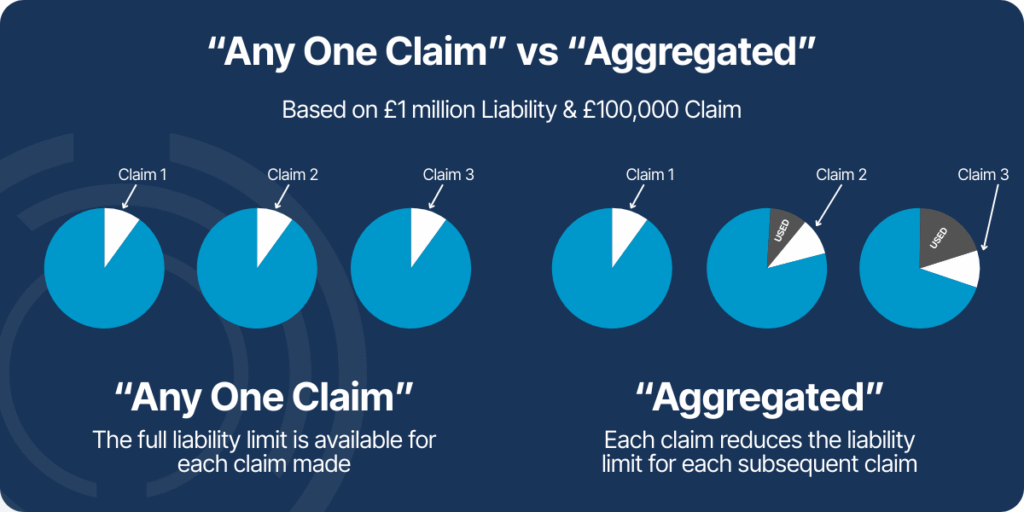
Ownership is the defining feature. The policy belongs to the policyholder. The liability limit is reserved for their use. If a claim occurs, it is assessed solely against that policy and those terms. In insurance terms, this is referred to as “any one claim”. Under an any one claim policy, you have access to the full liability limit as stated in your policy for each claim e.g. with a £1million liability limit in an any one claim policy, each claim has access to the full £1million.
When the policyholder has their own policy, other policyholders’ claims do not reduce the liability limit shown on their policy, and their cover does not rely on a shared pool across unrelated policyholders.
This structure provides predictability and clarity. It allows the policyholder to understand exactly what protection they have, to evidence it easily, and to operate confidently in both recreational and commercial environments.
Coverdrone provides specialist drone insurance, issuing individual policies to named policyholders, with clearly defined liability limits that apply to each policy.

How membership-based drone insurance is commonly structured
Some drone insurance is arranged through membership of an organisation, club, or association rather than through an individual policy issued to each operator.
In these arrangements, the insurance policy is usually held by the organisation itself. Members are permitted to rely on that policy while they meet certain conditions (such as up-to-date payment of membership dues), rather than holding a standalone policy in their own name.
This is where advertised liability limits can be misunderstood.
It is not unusual to see membership-based drone insurance promoted with liability limits in the millions. On the surface, that figure can feel reassuring. What is less obvious is that the limit may apply across the entire membership base, rather than being reserved for each individual operator.
In insurance terms, shared/membership policies are typically written on an aggregate basis, meaning each claim made against the policy reduces the amount of cover available for each subsequent claim. For example, if a liability limit of £10 million is shared among 10,000 people and 1 person makes a £1 million claim, then there is only £9 million left to be shared among those 10,000 people.
In practical terms, that can mean hundreds, thousands, or even tens of thousands of members relying on the same overall liability limit.
At that point, it is reasonable to consider whether you would feel comfortable sharing your insurance policy and its liability limit with many other drone operators, all flying independently, with different levels of experience, in different environments, and different levels of risk, all of which is unknown to you.
Where a liability limit is shared, claims do not exist in isolation. A small number of serious incidents involving just a handful of operators can place pressure on the overall policy. Large claims can draw significantly from the available limit, which may affect the protection available to other members relying on the same arrangement. Shared arrangements vary, so the practical step is to check how the policy applies the limit and what documentation you can obtain showing how the cover applies to you.
This does not mean claims are inevitable, nor does it mean the cover has no value. It does mean the certainty of how that liability limit behaves is very different from a policy where the full limit applies to one operator alone.
Because the word “insurance” is used in both cases, many drone operators assume the structure is the same. The difference often only becomes visible when documentation is examined closely, or when reliance on the insurance becomes more critical (such as in the event of a claim).
Another important distinction is the scope of cover itself. Membership-based arrangements commonly focus on public liability insurance only, with equipment cover either not included or arranged separately. This means damage to, loss of, or theft of the drone and its equipment is not usually insured under the same arrangement.
At Coverdrone, public liability insurance and equipment cover can be held together on the same policy. This allows policyholders to insure not only their liability to others, but also the drone, payloads, and associated ground-based equipment they rely on to fly (depending on the cover they choose).
If you want certainty about how your liability limit applies, an individual policy makes that clear from the outset.
You can get a quote from Coverdrone online and see your cover options clearly before you buy.
Why policy ownership matters in real-world drone operations
The structure of your insurance becomes particularly important when someone else needs reassurance.
Clients, landowners, event organisers, site managers, and local authorities frequently ask drone operators to provide proof of insurance before approving flights. They want to see who is insured, what is covered, and what level of liability protection is in place.
With an individual policy, this is straightforward. You can provide documentation showing your name, the insurer, the policy number, your cover period, and the applicable limits.
With membership-based arrangements, documentation may confirm membership rather than policy ownership. The insured party shown on the underlying policy may be the organisation, not the operator. The liability limit may apply collectively rather than individually.
This distinction can influence how confidently third parties accept the insurance as evidence of cover, particularly in commercial or managed environments.
The same considerations apply in the event of an incident. When something goes wrong, insurers, solicitors, and third parties examine responsibility and coverage closely. Clear policy ownership helps establish who is insured and how the policy responds, reducing uncertainty and potential delays at an already difficult time.
The smart questions drone operators should ask about their insurance
Understanding your drone insurance starts with asking practical questions about how the cover is structured and how it behaves in real situations.
Every drone operator should feel comfortable asking the following of their insurer:
- Is the insurance policy issued in my name or my business name?
- Do I have a unique policy number that applies specifically to me?
- Who is listed as the insured party on the policy documents?
- Does the stated liability limit apply only to my operations, or is it shared across multiple members?
- If the limit is shared, how many operators rely on that same limit?
- Could claims made by other operators reduce the protection available to me?
- If I operate commercially, how do I know my insurance is compliant with aviation law
- Can I provide documentation that clearly identifies me as the insured, rather than simply confirming membership?
These questions are not about being combative or distrustful. They are about understanding your level of cover and exposure.
Insurance exists to provide certainty when something goes wrong. Where a liability limit is shared, the behaviour of other operators can influence outcomes, no matter how carefully and responsibly you fly.
Clear answers to these questions allow you to assess whether your insurance structure matches your expectations and the level of certainty you want when flying.
Why Coverdrone focuses on clarity and certainty
Coverdrone is a specialist drone insurance provider, and the way our policies are structured reflects how drones are used in the real world.
Drone operations involve regulated airspace, proximity to people and property, and increasing scrutiny from clients, landowners, and authorities. Insurance needs to function reliably in those environments, and not just exist on paper.
We are directly authorised and regulated by the Financial Conduct Authority (FCA). That means our policies are issued within a formal regulatory framework, including defined complaints handling procedures and clear accountability obligations, designed to protect customers throughout the life of the policy.
This differs from arrangements where insurance is accessed indirectly through membership of an organisation. In those cases, the organisation is not usually the insurer or the regulated seller of the policy, and the insurance itself is provided by a separate third party. While cover may still exist, the regulatory relationship and accountability sit elsewhere.
For that reason, every Coverdrone policy is issued to a named individual or business, with clearly defined limits that apply to that policy alone. There is no shared pool of liability across unrelated operators, and no reliance on membership structures to determine how cover applies.
This approach provides certainty. Operators know exactly what level of protection they have, who the insurer is, and what documentation they can present when asked. Claims are assessed against the insured operator’s own policy, without being influenced by the actions or claims history of others.
Coverdrone’s focus on clarity is deliberate because drone insurance is not an abstract product. It supports real flights, real clients, and real responsibility. Clear ownership of a policy and a dedicated liability limit are fundamental to operating with confidence and professionalism.
Know where you stand before you take off.

Why understanding your insurance structure matters as your flying evolves
Many drone operators begin flying casually and gradually take on more complex work.
Hobby flying can become semi-professional. Occasional paid work can turn into regular contracts. Client expectations increase, and scrutiny grows.
For commercial operators, insurance structure also needs to keep pace with business growth. Some membership-based public liability schemes apply turnover limits (where applicable) that define how much commercial activity is permitted under the cover. These limits are often set at relatively low levels and can be easy to overlook as work increases.
Coverdrone does not apply turnover caps to public liability cover. Commercial operators are insured based on operational use, which removes the risk of outgrowing a turnover threshold without realising it.
Understanding the structure of your insurance early helps avoid mismatches as your flying develops.
Conclusion
Drone insurance works best when you understand exactly what you hold.
Many operators assume their insurance is personal because that is how insurance often works. Sometimes that assumption is correct. Sometimes the structure is different.
Taking the time to understand whether your drone insurance is issued to you as an individual, or whether you are relying on cover provided through a broader arrangement, gives you control and confidence.
Clear understanding is the foundation of good risk management. It supports responsible flying, professional credibility, and peace of mind every time you take off.
Ready to make sure your drone insurance is issued to you, with clear limits that apply to your flights?
Get a quote from Coverdrone in minutes and see exactly what cover you’ll hold before you fly.
Frequently Asked Questions
Is all drone insurance issued as an individual policy?
No. Some drone insurance is issued as an individual policy in the policyholder’s name, while other arrangements provide cover through membership of an organisation. At Coverdrone, every policy is issued to the individual or business named on the policy, with clearly defined limits that apply to that policy alone.
If a policy advertises a high liability limit, does that mean I personally have access to all of it?
Not always. With an individual Coverdrone policy, the stated liability limit applies solely to the insured named on the policy, and the policyholder has access to their full liability limit for each claim. With some membership-based arrangements, the advertised limit may apply across the entire membership base rather than to each member individually and be aggregated, meaning that claims reduce the liability limit available for subsequent claims.
What documentation should I expect to receive?
A Coverdrone policy includes a policy schedule issued in your name or business name, a unique policy number, the insurer details, and the applicable limits of cover. This documentation can be shared with clients, site owners, or authorities as clear evidence of insurance. Membership-based arrangements may provide confirmation of membership rather than a personal policy document.
Why do clients or site owners sometimes ask for specific insurance documents?
Clients and site owners often need clear confirmation of who is insured and what cover applies before approving drone operations. Individually issued Coverdrone policies provide this clarity by identifying the insured operator directly on the policy documentation.
How can I check how my drone insurance is structured?
You can confirm whether your insurance is issued as an individual policy by checking who the policy is issued to, whether you have a unique policy number, and whether the liability limit applies only to you. Coverdrone policies are always issued on an individual basis, so this information is clearly shown in your policy documents.