

When getting a quote for a drone insurance policy, the first question youβll need to ask yourself is what type of drone operator you are.
You can either purchase recreational drone insurance (sometimes referred to as βhobbyβ drone insurance) or commercial drone insurance and itβs important to understand the difference between the two when purchasing a policy to ensure you have the right protection in place.
The easiest way to determine this is to consider your own circumstances against the definition of a recreational drone user. A recreational drone user is classed as someone who flies a drone purely for βsport or fun/leisure with no potential commercial gainβ.
If your purpose for flying falls outside of this definition, you would need to purchase a commercial drone policy to ensure you are fully compliant with EC785/2004 regulations.
Whilst this may sound pretty straightforward, there are some grey areas that itβs important to consider, particularly around the definition of βcommercial gainβ and who this would apply to. Β
Below we take a look at some real-life scenarios and provide guidance on the type of policy they would need for each to ensure they have the appropriate levels of cover and protection in place.
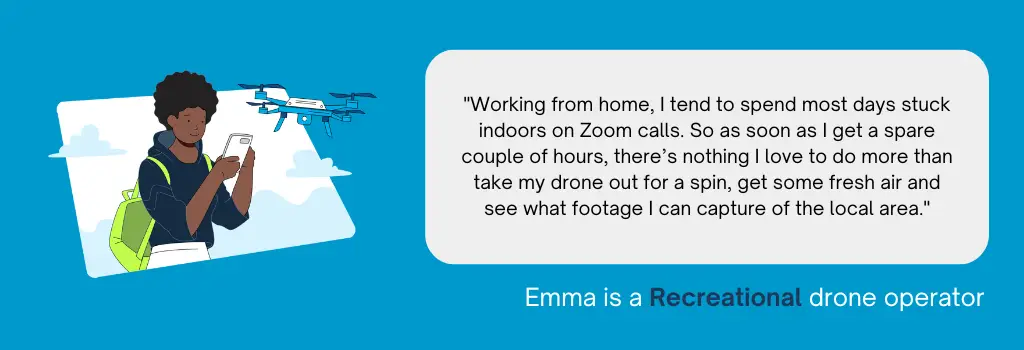
Example 1
In this example, Emma is clearly only flying her drone for fun and leisure purposes so she would be classed as a recreational drone operator.
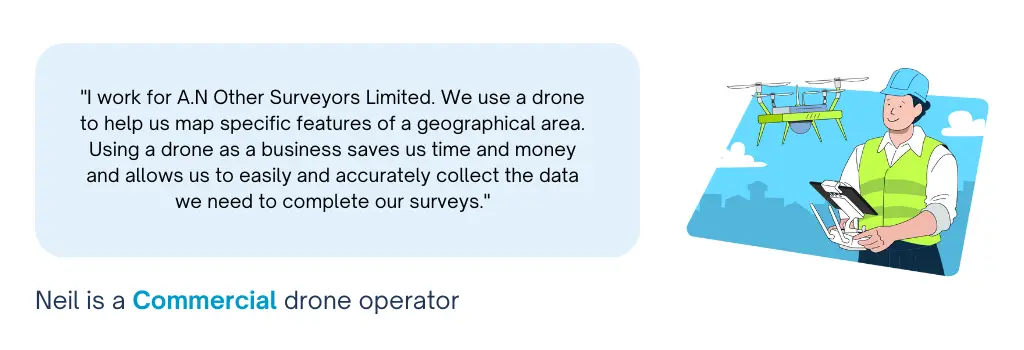
Example 2
Neil has stated that his company use a drone because it saves them both time and money. Itβs clear from this example that the company gains commercially from its use. Neil would therefore be classed as a commercial drone operator and would need to purchase a commercial drone insurance policy to give the business the protection they require and to ensure they comply with EU Regulation EC785/2004.
Example 3
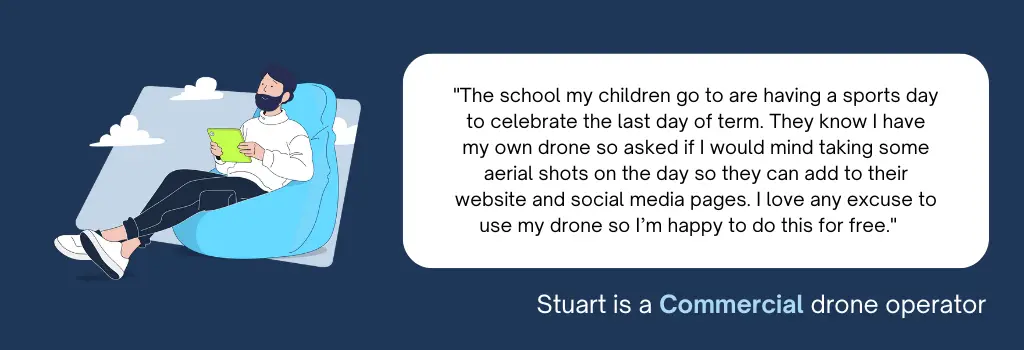
The important point to remember here is that commercial gain doesnβt necessarily have to relate to the drone operator themselves. If you use your own drone to take aerial footage of an event at your childβs school, it wouldnβt matter if you carried this out as a favour to the school and received no payment.
The school would technically gain commercially from this and therefore youβd need to be covered under a commercial drone policy to ensure you have the right level of protection in place. Therefore, in this particular scenario, Stuart would be classed as a commercial drone operator.
Remember, Coverdrone can provide short-term commercial policies starting from as little as one day. So if you already have a recreational policy in place, itβs worth considering the difference in cost to take out a short-term commercial policy to cover the days you intend to carry out this type of work, especially if itβs likely to be infrequent, compared to upgrading your main policy to a commercial one, as it could save you money.
We hope these examples help to provide some clarity on the difference between drone operators. However our friendly and helpful team are always on hand to discuss your requirements and offer support if ever you are unsure on the type of policy you need.